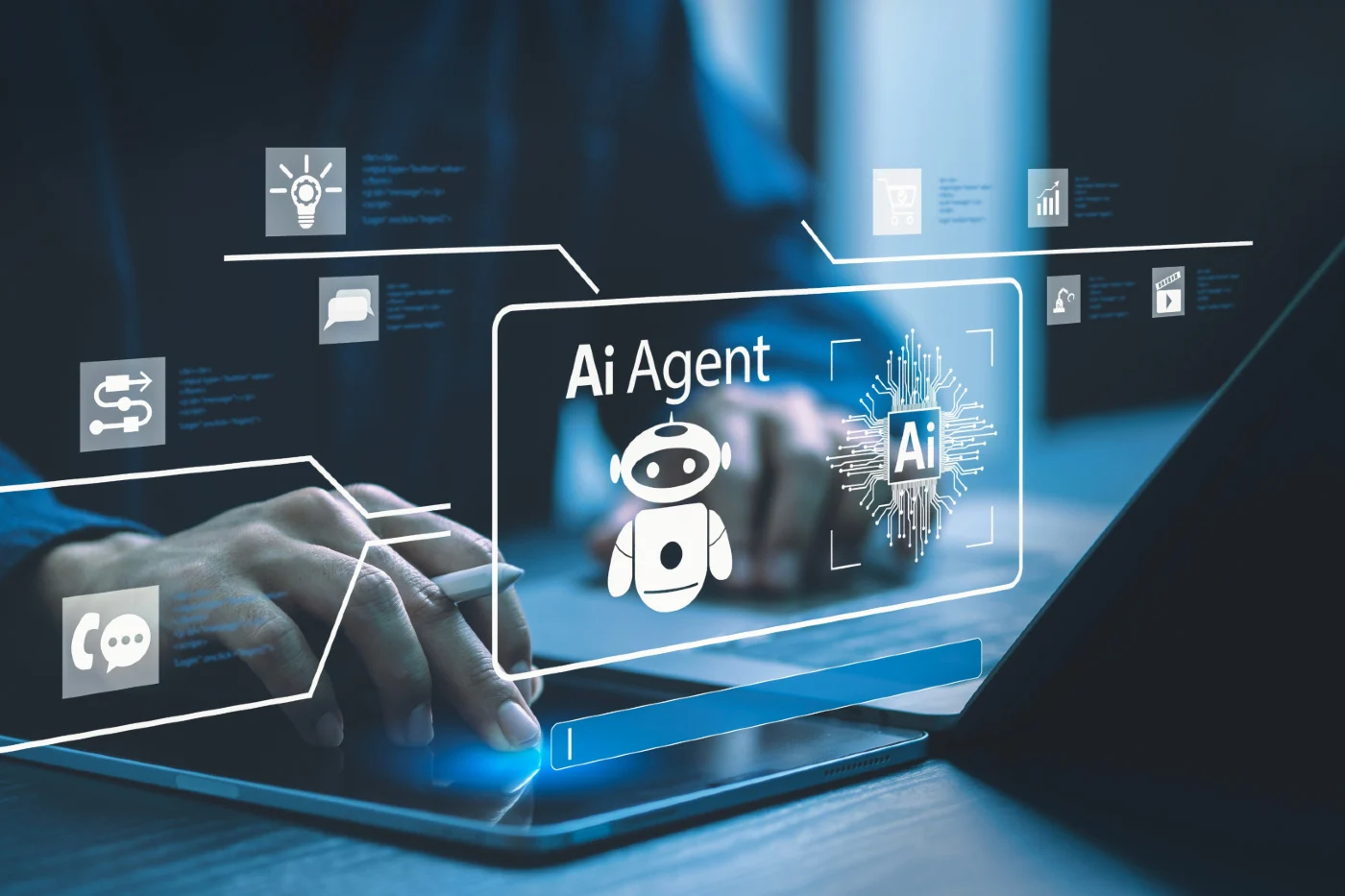
Artificial intelligence is evolving rapidly, and one of the most important emerging technologies is the development of AI agents.
Unlike traditional AI tools that simply respond to prompts, AI agents can perform complex tasks autonomously, interact with software, and complete multi-step processes without constant human input.
Because of these capabilities, many experts believe AI agents will become one of the most transformative technologies of the next decade.
What Are AI Agents?
AI agents are autonomous systems powered by advanced artificial intelligence models that can plan, make decisions, and execute tasks.
Instead of responding to a single prompt, these systems can:
- analyze information
- create plans
- execute actions
- adjust their behavior based on results
This allows them to operate more like digital assistants that can manage workflows and complete real tasks.
How AI Agents Are Being Used
Companies are already exploring the use of AI agents in many industries.
Some of the most common applications include:
Customer support automation
AI agents can respond to customer questions, manage tickets, and resolve problems automatically.
Business process automation
Companies can automate repetitive tasks such as data entry, report generation, and scheduling.
Software development
Developers are using AI agents to write code, test applications, and identify bugs.
Digital marketing
AI systems can analyze campaign performance and automatically adjust advertising strategies.
Why AI Agents Are Trending in the United States
Interest in AI agents has grown significantly in the technology industry.
Major tech companies and startups are investing heavily in the development of autonomous AI systems capable of managing complex tasks.
These systems are seen as the next step after chatbots and generative AI models.
Instead of simply generating content, AI agents can take action and complete workflows.
The Impact on Jobs and Productivity
AI agents could dramatically increase productivity across many industries.
Businesses may use these systems to automate repetitive work, allowing employees to focus on strategic tasks.
However, this transformation also raises questions about the future of certain types of jobs.
Experts say the impact will likely depend on how companies adopt the technology and how workers adapt to new digital tools.
Challenges and Risks
Despite the potential benefits, AI agents also present challenges.
Some of the main concerns include:
- security risks
- data privacy issues
- ethical concerns
- reliability of autonomous systems
Developers are working on safeguards to ensure these systems operate responsibly.
The Future of AI Agents
Many analysts believe AI agents will become one of the most important technologies in artificial intelligence.
Future versions could manage entire workflows, operate software platforms, and assist humans in complex decision-making.
As AI technology continues to advance, autonomous agents could become an essential part of the digital economy.
1 thought on “AI Agents: The Next Big Revolution in Artificial Intelligence”