
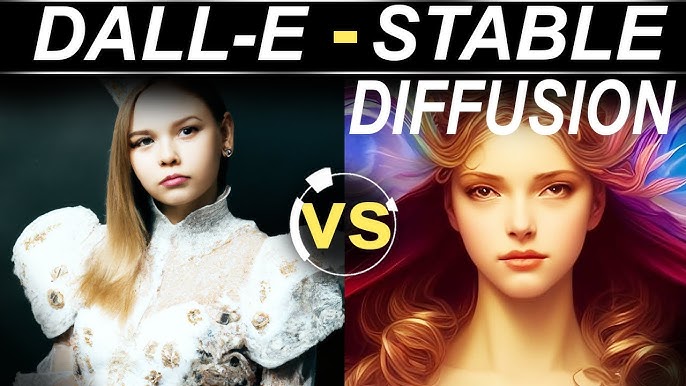
The comparison Stable Diffusion vs DALL-E has become one of the most discussed topics in the world of artificial intelligence and digital creativity. In recent years, AI image generators have transformed the way artists, designers, and content creators produce visual material.
Instead of relying solely on traditional design software, users can now generate complex images simply by describing what they want in a text prompt.
These AI models interpret the description and produce original images within seconds.
Among the most popular tools leading this technological shift are Stable Diffusion and DALL-E. Both systems use advanced neural networks capable of converting text instructions into highly detailed images.
Although they share similar goals, the technologies behind them and the user experience they offer are quite different.
For this reason, many creators and designers ask the same question: in the comparison Stable Diffusion vs DALL-E, which AI image generator is better in 2026?
In this article, we analyze their features, image quality, usability, and the most common use cases to better understand the strengths of each platform.
What Is Stable Diffusion
Stable Diffusion is an artificial intelligence model designed specifically for generating images from text prompts.
One of its most distinctive features is that it is open source, which allows developers and creators to modify and improve the technology.
Because of this open ecosystem, Stable Diffusion has become extremely popular within the AI community.
Many developers have created custom models, plugins, and tools that extend the capabilities of the system.
Some of the key features of Stable Diffusion include:
- text-to-image generation
- open-source architecture
- advanced customization options
- ability to run locally on a computer
- integration with multiple creative platforms
Thanks to these characteristics, Stable Diffusion has become one of the most flexible AI image generators available today.
Artists often use it to experiment with different visual styles and produce highly personalized artwork.
If you want to explore other comparisons related to AI image generators, you can read this article on your website:
What Is DALL-E
DALL-E is another powerful AI image generation system developed by OpenAI.
The model was designed to create images from natural language descriptions using deep learning technology.
Since its release, DALL-E has gained global attention for its ability to produce creative and highly detailed images.
Users can describe almost any concept, and the system generates visuals that match the description.
Some of the most important features of DALL-E include:
- AI-generated images from text prompts
- image editing using AI instructions
- image expansion and modification
- generation of creative and conceptual artwork
One of DALL-E’s strongest advantages is its simplicity.
The platform is designed to work entirely online, meaning users do not need to install software or configure complex settings.
This accessibility makes it one of the most beginner-friendly AI image generators available.
You can also explore another related comparison on your website:
Stable Diffusion vs DALL-E: Image Quality
One of the most important factors when comparing Stable Diffusion vs DALL-E is image quality.
Stable Diffusion is capable of producing extremely detailed visuals, especially when users adjust advanced parameters or use specialized models.
Because of the large ecosystem of community-developed models, users can generate images in a wide range of artistic styles.
For example, creators can produce:
- realistic photographs
- anime illustrations
- fantasy artwork
- concept art for games and films
DALL-E also produces high-quality images and is particularly strong at understanding complex prompts.
The system often generates creative compositions that closely match the user’s description.
Both tools are capable of impressive results, but Stable Diffusion typically offers more control for advanced users.
Stable Diffusion vs DALL-E: Ease of Use
Ease of use is another key element in the Stable Diffusion vs DALL-E comparison.
DALL-E is designed with simplicity in mind. Users simply type a prompt, and the system generates multiple images automatically.
No technical knowledge is required, which makes it an excellent option for beginners.
Stable Diffusion, however, offers a more complex environment.
While some online platforms provide simplified versions, many users install the model locally to unlock its full capabilities.
This setup can require additional technical knowledge.
As a result, beginners often find DALL-E easier to start with, while advanced creators may prefer the flexibility of Stable Diffusion.
Stable Diffusion vs DALL-E: Customization
Customization is one of the biggest strengths of Stable Diffusion.
Because the model is open source, developers have created thousands of custom models that allow users to generate very specific visual styles.
Users can also modify parameters such as:
- image resolution
- sampling methods
- artistic style
- model training data
This level of control gives artists enormous creative freedom.
DALL-E, in contrast, focuses more on simplicity and consistency.
Although it offers editing tools, the platform does not provide the same level of deep customization as Stable Diffusion.
Use Cases for Stable Diffusion
Stable Diffusion is widely used in creative and artistic projects.
Some of the most common applications include:
- digital art creation
- concept art for games and movies
- character design
- experimental visual projects
- AI-assisted illustration
Because of its flexibility, it is especially popular among professional artists and AI enthusiasts.
Use Cases for DALL-E
DALL-E is also widely used across multiple industries.
Common applications include:
- marketing and advertising visuals
- social media content creation
- blog and article illustrations
- conceptual design ideas
- creative experimentation
Its simplicity makes it particularly useful for creators who want quick results without complex configuration.
You can also explore other AI comparisons on your site:
The Future of AI Image Generators
The rapid development of tools like Stable Diffusion and DALL-E shows how artificial intelligence is transforming the creative industry.
AI image generators allow users to produce visual content in seconds, something that previously required hours of manual work.
As the technology continues evolving, we may see improvements such as:
- higher image resolution
- greater creative control
- AI-generated animations
- deeper integration with design software
These innovations could redefine how artists, designers, and content creators work in the digital age.
Conclusion: Stable Diffusion vs DALL-E
The comparison Stable Diffusion vs DALL-E highlights two powerful approaches to AI image generation.
Stable Diffusion stands out because of its open-source ecosystem, advanced customization, and strong community support.
DALL-E excels in simplicity, accessibility, and the ability to generate creative images quickly.
Choosing between Stable Diffusion vs DALL-E ultimately depends on the user’s needs and technical experience.
Advanced creators who want maximum control may prefer Stable Diffusion, while beginners and casual users may find DALL-E easier to use.
Both platforms represent major milestones in the evolution of artificial intelligence and digital creativity.